Coeliac Disease, the Brain and Nerves: Ataxia, Neuropathy and Brain Fog
Coeliac disease is diagnosed in the gut, but it’s a systemic autoimmune condition — and for a small number of people, the nervous system is one of the places it shows up. Gluten ataxia, peripheral neuropathy, headaches and the woolly feeling many describe as “brain fog” are all recognised, if uncommon, associations, and they can occur even in people who never had obvious digestive symptoms.
It’s worth saying clearly at the outset: this is not something that happens to most people with coeliac disease. The strength of the neurological evidence is still debated in the research, the effects described here are the exception rather than the rule, and the same treatment you’re already learning — a strict, lifelong gluten-free diet — is what tends to settle or improve many of them. This page is a calm map of what can be involved, and when it’s worth mentioning to your GP.
The short answer
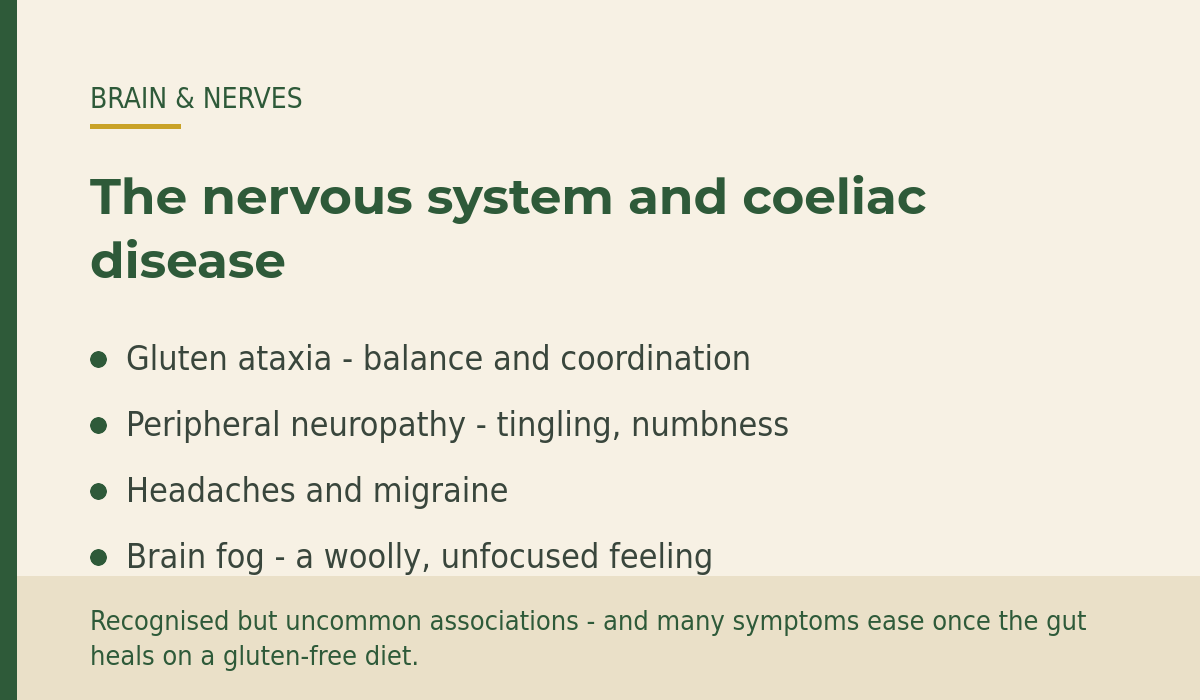
Coeliac disease is occasionally linked with neurological effects — most often gluten ataxia (balance and coordination), peripheral neuropathy (tingling or numbness), migraine and headaches, and “brain fog.” These are recognised but uncommon, and they can appear without gut symptoms. Many improve on a gluten-free diet. If neurological symptoms persist, ask your GP, who can refer you to a neurologist where needed.
Why the nervous system can be involved at all
In coeliac disease, eating gluten triggers an immune reaction that’s measured in the small intestine — but the immune process itself is body-wide. Researchers think the neurological links come from two overlapping routes: an immune reaction that can affect nerve tissue directly in some people, and the knock-on effects of long-standing inflammation and poor absorption of nutrients such as vitamin B12, folate and vitamin E, which the nervous system relies on. Because these mechanisms are still being unpicked, you’ll see careful, hedged language throughout — “associated with,” “may,” “in some people” — and that caution is deliberate rather than evasive.
Gluten ataxia — balance and coordination
Gluten ataxia is thought to be an immune-mediated effect on the cerebellum, the part of the brain that fine-tunes balance and coordination. People who experience it may notice unsteadiness on their feet, clumsiness, or difficulty with precise movements. It’s one of the more studied neurological associations, but it remains uncommon, and it can develop with little or no gut involvement, which is part of why it can take time to connect to coeliac disease.
Assessment belongs with a neurologist, who can look for other, more common causes of ataxia before attributing it to gluten. Where gluten ataxia is diagnosed, a strict gluten-free diet is the mainstay, and some people see stabilisation or improvement over months — earlier is generally thought to be better. If your balance or coordination changes, that’s a reason to see your GP rather than something to wait out.
Peripheral neuropathy — tingling and numbness
Peripheral neuropathy describes tingling, numbness, pins and needles or burning, most often in the hands and feet. It’s a recognised association with coeliac disease and, like ataxia, can appear without digestive symptoms. Nutrient shortfalls — particularly vitamin B12 — can contribute, which is one reason your clinician may check your bloods as part of the picture.
There are many possible causes of neuropathy, so persistent symptoms deserve proper assessment rather than assumption. A gluten-free diet, together with correcting any deficiencies your clinician identifies, is the usual approach; how much symptoms improve varies from person to person. Let your GP know if numbness or tingling is ongoing.
Headaches and migraine
Headaches, and migraine in particular, are reported more often among people with coeliac disease than in the general population. The relationship isn’t fully understood, and headaches are common for all sorts of reasons, so this is an association rather than a one-to-one cause. Encouragingly, some people find their headaches become less frequent once they’re established on a gluten-free diet. If headaches are frequent, severe or new for you, they’re worth discussing with your GP, who can help you manage them and rule out other causes.
“Brain fog” — the woolly, unfocused feeling
Many people with coeliac disease describe “brain fog”: a hard-to-pin-down feeling of being fuzzy, forgetful or slow to concentrate, sometimes worse after accidental gluten exposure. It’s a genuine and commonly reported experience, even though it isn’t a formal medical diagnosis. Tiredness, disrupted sleep, low iron or B12, and the general demands of adjusting to the condition can all feed into it.
The reassuring pattern is that brain fog tends to lift as the gut heals on a gluten-free diet and any nutrient levels are restored. If it’s persistent or affecting your daily life, mention it at your follow-up — it may point to a deficiency worth correcting, and a coeliac-aware dietitian can help you close nutritional gaps.
How strong is the evidence, really?
Honesty matters here. The neurological side of coeliac disease is an area of active research and genuine debate. Some links, such as gluten ataxia and peripheral neuropathy, are well described in the literature; others rest on smaller studies, and researchers don’t always agree on how strong the connection is or how often the gluten-free diet reverses established nerve changes. None of this should alarm you — the take-home is simply that these are recognised but uncommon associations, best assessed individually by a clinician rather than assumed. Where symptoms are present, the gluten-free diet is the sensible foundation, and specialist input guides the rest.
At a glance
A quick summary — not a diagnosis. If something here sounds familiar, it’s a conversation to have with your medical team, not a conclusion to reach alone.
| What it’s called | What it can feel like | What tends to help · who to see |
|---|---|---|
| Gluten ataxia | Unsteadiness, clumsiness, difficulty with coordination | Strict gluten-free diet; assessment by a neurologist — earlier is generally better |
| Peripheral neuropathy | Tingling, numbness or burning in hands and feet | Gluten-free diet; correcting deficiencies (e.g. B12); GP, then neurology if needed |
| Headache & migraine | More frequent or severe headaches, migraine attacks | Gluten-free diet may reduce frequency; usual migraine care via your GP |
| Brain fog | Fuzziness, forgetfulness, trouble concentrating | Usually lifts on a gluten-free diet; check for low iron or B12 with your team |
When to get it looked at
Persistent or worsening neurological symptoms — ongoing unsteadiness, numbness that doesn’t settle, frequent headaches, or brain fog that isn’t improving — deserve a proper assessment. Start with your GP, who can check your bloods, review your gluten-free diet, and refer you to a neurologist where that’s the right step. Raising it isn’t making a fuss; it’s exactly what the follow-up system is for, and it means other causes are considered rather than everything being put down to coeliac disease.
The bottom line
- Neurological effects — gluten ataxia, neuropathy, headaches and brain fog — are recognised but uncommon associations, and can occur without gut symptoms.
- The strength of the evidence varies and is still debated, so these are best assessed individually rather than assumed.
- A strict gluten-free diet is the foundation, and many symptoms — brain fog especially — tend to ease as the gut heals.
- Persistent symptoms warrant a GP visit and, where appropriate, a neurology referral.
Keep exploring
- Coeliac Disease Beyond the Gut — the whole-body picture this page is part of.
- Coeliac Disease and Mental Health — anxiety, depression and where to find support.
- Coeliac Disease, Fertility and Pregnancy — what the evidence says, and what reassures.
- Coeliac Follow-Up Care — the reviews and blood tests that catch nutrient gaps early.
- Coeliac Diagnosis & Medical FAQ — the questions people ask around testing.
Frequently asked questions
Can coeliac disease cause neurological symptoms without any gut symptoms?
Yes, it can. Gluten ataxia and peripheral neuropathy in particular are recognised, if uncommon, associations that sometimes appear with little or no digestive upset. That’s one reason persistent neurological symptoms are worth mentioning to your GP, who can consider coeliac disease alongside other possible causes.
What is gluten ataxia?
Gluten ataxia is thought to be an immune-mediated effect on the cerebellum, the part of the brain that controls balance and coordination. It’s uncommon and is assessed by a neurologist, who will look for other causes first. Where it’s diagnosed, a strict gluten-free diet is the mainstay, and starting earlier is generally thought to give the best chance of stabilising or improving symptoms.
Will brain fog get better on a gluten-free diet?
Many people find that brain fog lifts as the gut heals and any nutrient levels, such as iron or B12, are restored. Everyone is different, so if it persists it’s worth raising at your follow-up, where a deficiency can be checked for and a coeliac-aware dietitian can help.
Should I see a specialist?
Persistent or worsening symptoms — ongoing unsteadiness, numbness, frequent headaches — deserve proper assessment. Start with your GP, who can arrange blood tests, review your diet, and refer you to a neurologist where that’s appropriate.
This page is general information, not medical advice. The neurological associations described here are uncommon and the evidence for some is still debated — discuss any symptoms with your GP, gastroenterologist, neurologist or a coeliac-aware dietitian.
Sources & standards: Coeliac UK (neurological conditions and coeliac disease; gluten ataxia; the gluten-free diet); NICE guideline NG20 (coeliac disease: recognition, assessment and management); the British Society of Gastroenterology (BSG) guidelines on the diagnosis and management of adult coeliac disease; the Codex Alimentarius gluten-free standard of no more than 20 ppm (20 mg/kg) of gluten; and AOECS (Association of European Coeliac Societies). Last verified: 2026-07-21.
Reviewed against the HTGF methodology — every claim sourced, every listing tiered and dated. This article is practical guidance, not medical advice.
Gluten-free confidence in your inbox.
Practical tips, new guides and community stories. No spam. Unsubscribe anytime.