Coeliac Follow-Up Care: Your Reviews, Blood Tests and Nutrient Checks
A coeliac diagnosis is the start of your treatment, not the end of the story. The gluten-free diet does the healing, but good follow-up care is how you check the healing is actually happening — and how you catch the nutrient gaps, bone-health questions and lingering symptoms that a single diagnosis appointment cannot cover. This guide explains what usually happens in the first year and beyond, what your blood tests can and cannot show, and the exact questions to bring so you get more from every review.
Key takeaways
- Coeliac care is ongoing: expect a review around 3–6 months after diagnosis, then annually.
- Antibody blood tests trend downward as the gut heals — but falling antibodies are a guide, not a perfect measure of healing.
- Ask about iron/ferritin, B12, folate, vitamin D and calcium, plus bone health and a possible DEXA discussion.
- A referral to a specialist dietitian is a normal, valuable part of coeliac care — ask for one if you have not seen one.
- This article helps you have better conversations with your clinician. It does not replace medical advice; some red-flag symptoms need prompt review.
Why follow-up matters
Guidelines such as the UK’s NICE guidance on coeliac disease (NG20) recommend structured follow-up rather than a one-off diagnosis and discharge. There are good reasons. Healing of the small intestine takes months to years, not weeks. Nutrient stores depleted before diagnosis need to be rebuilt and rechecked. And symptoms that persist despite a careful gluten-free diet deserve investigation rather than resignation. Follow-up is where all of that gets tracked.
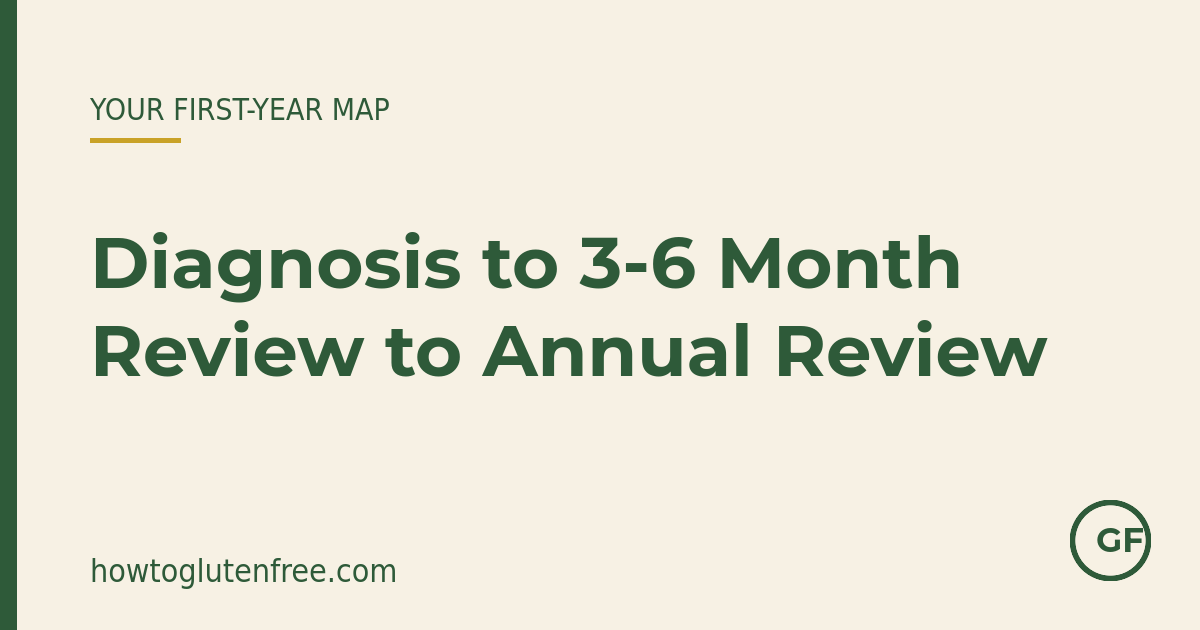
Your first-year follow-up map
| When | Usual focus | What to raise |
|---|---|---|
| At diagnosis | Start the gluten-free diet; baseline bloods; dietitian referral | Ask for a dietitian and written information |
| 3–6 months | Are symptoms and antibodies moving as expected? | Symptom changes, diet questions, nutrient checks |
| ~12 months | First annual review; recheck antibodies and nutrients | Bone health, family screening, ongoing support |
| Yearly after | Annual review of symptoms, diet, weight and bloods | Anything new; confidence with eating out and travel |
Local healthcare systems vary, so your exact schedule may differ. The principle holds everywhere: an early review to check you are on track, then a regular annual check.
What blood tests can — and cannot — show
The antibody tests used in coeliac disease (such as tTG-IgA) usually fall over the months after you go gluten-free, and a downward trend is a reassuring sign that gluten exposure is dropping. But they are an indirect guide. Antibodies can lag behind, and normal antibodies do not always prove the gut has fully healed. That is why persistent symptoms are taken seriously even when bloods look good, and why some people are offered further assessment. Ask your clinician what your levels are doing and what they expect next.
The nutrients worth asking about
Because coeliac disease can affect absorption before diagnosis, several nutrients are commonly checked and, if low, corrected:
- Iron / ferritin — iron-deficiency anaemia is a very common finding in coeliac disease.
- Vitamin B12 and folate — both affect energy and blood health.
- Vitamin D and calcium — central to bone health, and often reviewed together.
Ask whether you need supplements based on your results, rather than starting them blind — testing first tells you and your clinician what is actually needed.
Bone health and DEXA
Long-standing, untreated coeliac disease can affect bone density, so bone health is a normal part of the conversation. Depending on your age, results and risk factors, your clinician may discuss a DEXA (bone-density) scan. It is a reasonable question to raise at your annual review.
Bring these questions to your appointments
For your doctor
- What blood tests should we repeat, and when?
- Are my antibody levels changing as expected?
- Do I need a bone-density assessment?
- Should we screen for related conditions such as thyroid disease, type 1 diabetes or anaemia?
- Should my first-degree relatives be tested?
For your dietitian
- Does my daily diet look nutritionally balanced?
- Am I getting enough fibre, iron, calcium, vitamin D and B vitamins?
- Are my product choices sound from a cross-contact perspective?
- Are gluten-free oats appropriate for me right now?
When to seek help sooner
Follow-up is scheduled, but some symptoms should not wait for the next appointment. Contact a clinician promptly for unexplained weight loss, persistent diarrhoea or vomiting, worsening abdominal pain, signs of dehydration, severe fatigue or breathlessness, anaemia that will not improve, or blood in the stool. Persistent symptoms despite a careful gluten-free diet are worth reviewing — they can point to hidden gluten exposure or another cause entirely, such as lactose intolerance or IBS.
Where to go next
- Just diagnosed? Your First 90 Days With Coeliac Disease.
- Reduce the hidden exposures that skew your bloods: Sharing a Kitchen When You Have Coeliac Disease.
- Clear up confusion with friends and family: The Coeliac Alphabet.
Sources: NICE guideline NG20 (coeliac disease: recognition, assessment and management); Coeliac UK (follow-up and annual review guidance); Codex Alimentarius gluten-free standard (≤20 ppm). This article is general information and does not replace individual medical advice.
Last verified: 2026-07-19.
Reviewed against the HTGF methodology — every claim sourced, every listing tiered and dated. This article is practical guidance, not medical advice.
Gluten-free confidence in your inbox.
Practical tips, new guides and community stories. No spam. Unsubscribe anytime.