Ingredients
Method
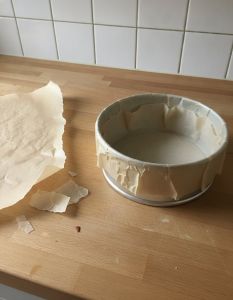
- Heat the oven to 160 °C (140 °C fan) / 325 °F. Line the base and sides of a 20 cm / 8 in round tin with baking paper. Use the paper as the base; peel it off before serving.
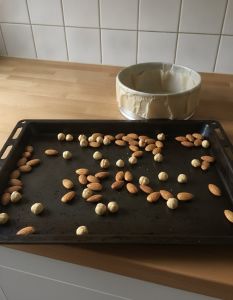
- Spread the almonds and hazelnuts on a tray and toast in the oven for 8 minutes, until fragrant. Let them cool slightly. Leave the nuts whole.
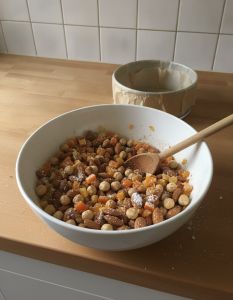
- In a large bowl, toss the nuts and candied peel with the rice flour, corn starch, xanthan gum, cinnamon and nutmeg until evenly coated.
- Put the honey and caster sugar in a small saucepan. Warm gently, stirring until the sugar dissolves, then bring to a gentle bubble for 1 minute. The mixture will be very hot.
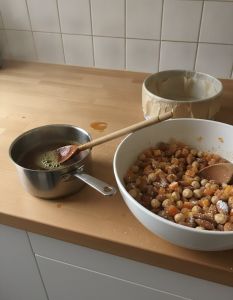
- Immediately pour the syrup over the nut mixture and stir firmly until no dry flour remains. Work promptly: the mixture becomes stiff as it cools.
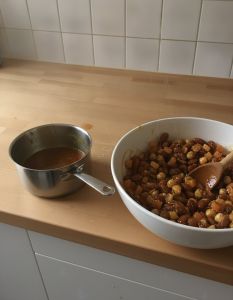
- Spoon into the lined tin. With a lightly dampened spoon, press it evenly into a compact layer, taking care around the hot mixture.
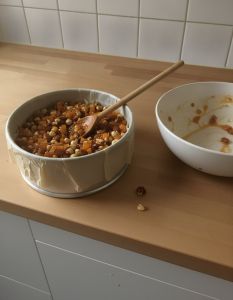
- Bake for 22 minutes, until the edges are gently bubbling and the surface looks set. The centre will still feel soft; it firms as it cools.
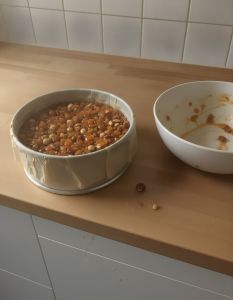
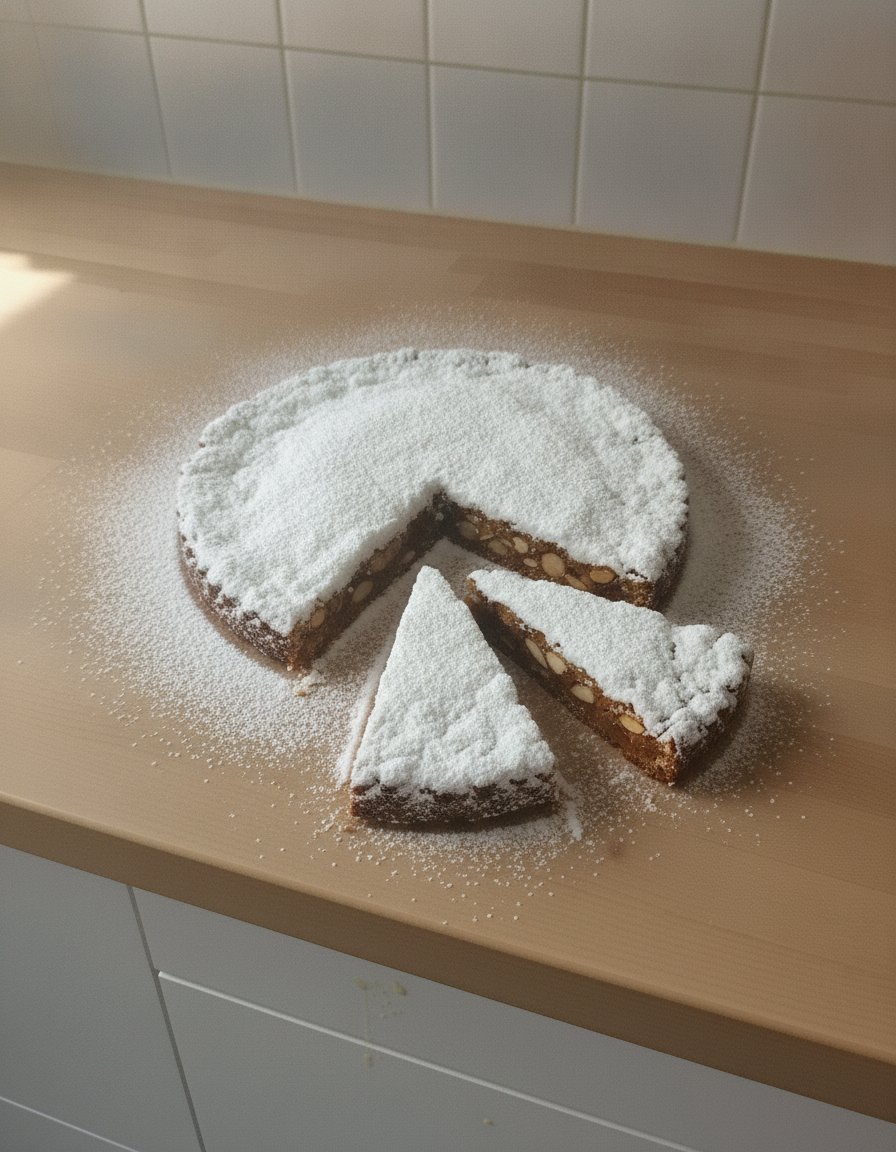
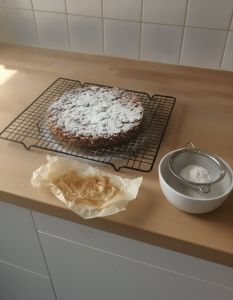
- Cool completely in the tin for about 2 hours. Lift out, remove the baking paper and dust with icing sugar. Cut into thin wedges.
Notes
Coeliac notes
• Flour and starch: rice and corn are naturally gluten-free, but they can be milled where wheat is milled. Buy the rice flour and the corn starch labelled gluten-free (milling cross-contact).
• Check the labels: candied peel, nuts, xanthan gum, honey, spices and icing sugar can have gluten-containing ingredients in their ingredients list. Choose ones labelled gluten-free if you cannot confirm that an ingredient is suitable.
• Wafers: Baking paper is the base here; peel it off before serving. If you use an ostia wafer instead, choose one labelled gluten-free.
• Your kitchen: use clean equipment and a work surface free of gluten-containing crumbs and flour.
• Allergens: contains almonds and hazelnuts. Baking tips
• The flour and starch weigh 70 g in total, so the xanthan is only 0.4 g, about 0.57 g per 100 g of flour and starch. A precision scale makes this small amount easier to measure.
• For neat wedges, let the panforte cool fully and use a sharp knife.
• Store the cooled cake well wrapped in an airtight container at room temperature.