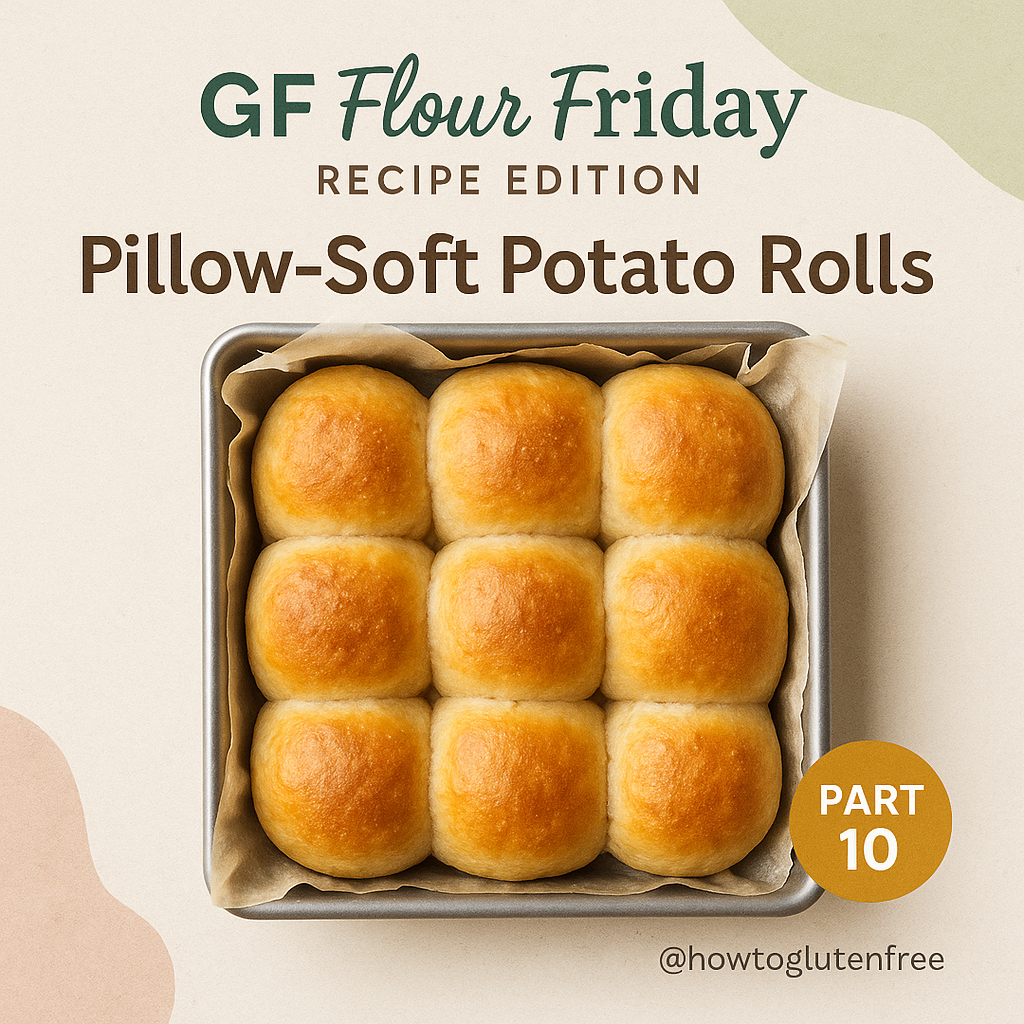
Ingredients
Method
- Mix & activate: In a large bowl, whisk all the dry ingredients. In a separate cup, dissolve the yeast in the warm water and let it sit 5–10 minutes until foamy. Add the yeast mixture and olive oil to the dry mix, then add the water gradually — potato flour is very absorbent, so you may not need it all.
- Knead & rest: Mix into a soft dough (a tacky texture is fine — do not add too much flour). Cover and let rise 45–60 minutes in a warm place for a better rise.
- Shape & bake: Form 9–12 small rolls (wet hands stop sticking). Bake at 200°C (fan) for 20–25 minutes until golden. Store airtight 2–3 days, or freeze and reheat at 180°C.
Notes
Coeliac notes
• "Certified gluten-free" is not optional here. Rice, sorghum and potato flours are naturally GF but very commonly milled in facilities that also process wheat — for a from-scratch GF bread, every flour must be labelled/certified gluten-free.
• Potato flour is NOT potato starch — they behave completely differently; this needs potato flour (absorbent, adds softness). Check the pack.
• Psyllium husk is the binder that replaces gluten — do not skip it (whole husk vs powder absorb differently; powder needs a little less). Buy plain, additive-free.
• Yeast is GF; avoid bread-machine blends with wheat-based improvers.
• A constructed gluten-free bread — safety comes from certified ingredients + a clean, flour-dust-free surface. When unclear, treat it as "not for me".
• "Certified gluten-free" is not optional here. Rice, sorghum and potato flours are naturally GF but very commonly milled in facilities that also process wheat — for a from-scratch GF bread, every flour must be labelled/certified gluten-free.
• Potato flour is NOT potato starch — they behave completely differently; this needs potato flour (absorbent, adds softness). Check the pack.
• Psyllium husk is the binder that replaces gluten — do not skip it (whole husk vs powder absorb differently; powder needs a little less). Buy plain, additive-free.
• Yeast is GF; avoid bread-machine blends with wheat-based improvers.
• A constructed gluten-free bread — safety comes from certified ingredients + a clean, flour-dust-free surface. When unclear, treat it as "not for me".