Gluten-Free Panforte: Honey, Nuts and Candied Peel

UPDATED=2026-11-12READ=5 MINREVIEW=HTGF EDITORIAL

This gluten-free panforte is a chewy cake of toasted almonds and hazelnuts, candied orange and citron peel and honey, bound with 60 g rice flour, 10 g corn starch and a little xanthan, with no ready-made flour blend. It is gluten-free when every flour, starch, xanthan, nut, candied peel, honey, spice and icing sugar you use is labelled gluten-free or checked on its ingredient list. It takes about 3 hours from start to slicing, most of it cooling, and gives 12 thin wedges.

A little wedge of panforte feels like Christmas tucked into a slice: honey, toasted nuts, jewel-bright peel and a gentle warmth of spice. It is chewy, fragrant and just right with a cup of coffee after a festive meal. This is our gluten-free version of the Siena classic, with a small amount of single flour and starch to hold all that fruit and nut mixture together. We call ours simply gluten-free panforte, inspired by the Siena tradition. For gluten-free baking, weigh if you can: cups vary a lot with these flours. If a pack leaves you unsure, the Label Lab helps.

Story and history

Panforte is a symbol of Sienese cooking, with roots in the Middle Ages. Historians point to loaves rich in pepper and honey, mentioned in a chronicle of 1205 as gifts owed to the nuns of an abbey in the province of Siena. Preparation began in September, when nuts and other ingredients were easier to find, and the cake was eaten at Christmas. The white style, with less spice and an icing sugar coat, dates from 1879, when it was made for Queen Margherita’s visit to Siena. Panforte di Siena is a PGI (Protected Geographical Indication), a protected name for a cake from the province of Siena that contains wheat flour; this gluten-free cake is our own version.

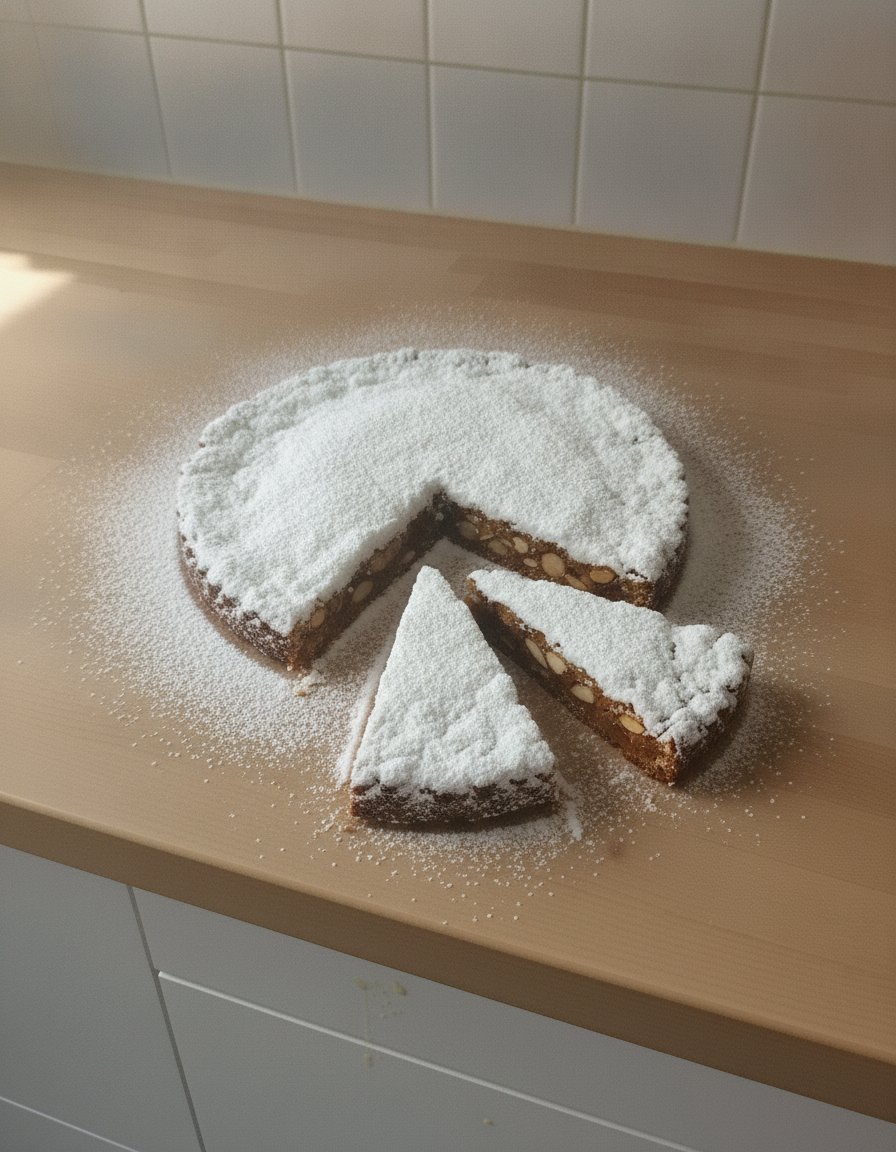
Step photos: Illustration (generated image)
A flat, round panforte under a thick layer of icing sugar, with two wedges cut so the almonds inside show

Gluten-Free Panforte: Honey, Nuts and Candied Peel

A chewy Christmas cake in the Tuscan tradition, with toasted almonds and hazelnuts, candied peel and honey, held together by rice flour and corn starch. Cool it for 2 hours, then dust with icing sugar. Contains almonds and hazelnuts.
Prep Time 25 minutes
Cook Time 30 minutes
Total Time 2 hours 55 minutes
Servings: 12 thin wedges
Course: Dessert
Cuisine: Italian

Ingredients


Nuts and candied peel
  • 180 g whole almonds read the label
  • 60 g whole hazelnuts read the label
  • 120 g candied orange peel, diced read the label
  • 100 g candied citron peel, diced read the label
Flour, starch and binder
  • 60 g rice flour labelled gluten-free (milling cross-contact)
  • 10 g corn starch labelled gluten-free (milling cross-contact)
  • 0.4 g xanthan gum labelled gluten-free
Spices and syrup
  • 3 g ground cinnamon read the label
  • 0.5 g ground nutmeg read the label
  • 90 g honey read the label
  • 100 g caster sugar
To finish
  • 10 g icing sugar, for dusting read the label

Method
 

  1. Heat the oven to 160 °C (140 °C fan) / 325 °F. Line the base and sides of a 20 cm / 8 in round tin with baking paper. Use the paper as the base; peel it off before serving.
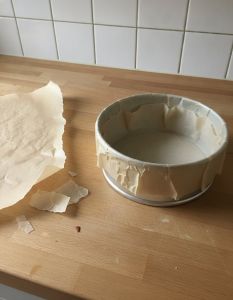
    A round baking tin lined with crinkled baking paper, with a sheet of paper and offcuts beside it
  2. Spread the almonds and hazelnuts on a tray and toast in the oven for 8 minutes, until fragrant. Let them cool slightly. Leave the nuts whole.
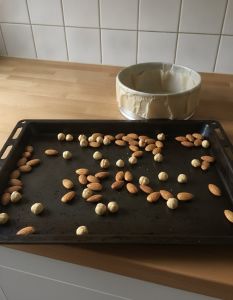
    A dark baking tray with a single layer of toasted almonds and hazelnuts, the lined tin behind it
  3. In a large bowl, toss the nuts and candied peel with the rice flour, corn starch, xanthan gum, cinnamon and nutmeg until evenly coated.
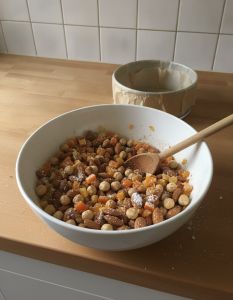
    A white bowl of toasted nuts and diced orange and citron peel, lightly dusted with flour and spice, with a wooden spoon
  4. Put the honey and caster sugar in a small saucepan. Warm gently, stirring until the sugar dissolves, then bring to a gentle bubble for 1 minute. The mixture will be very hot.
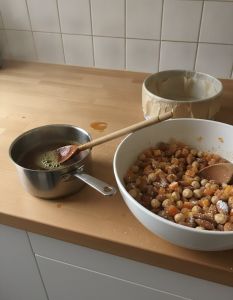
    Honey and sugar bubbling in a steel saucepan with a wooden spoon, next to the bowl of nuts and peel
  5. Immediately pour the syrup over the nut mixture and stir firmly until no dry flour remains. Work promptly: the mixture becomes stiff as it cools.
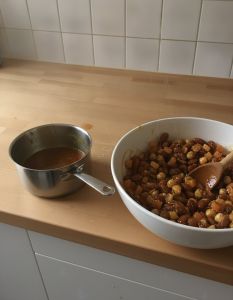
    Nuts and candied peel coated in glossy amber syrup in the white bowl, being stirred with a wooden spoon
  6. Spoon into the lined tin. With a lightly dampened spoon, press it evenly into a compact layer, taking care around the hot mixture.
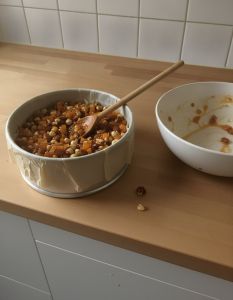
    The sticky mixture of nuts and candied peel pressed into the lined round tin, with a wooden spoon on top
  7. Bake for 22 minutes, until the edges are gently bubbling and the surface looks set. The centre will still feel soft; it firms as it cools.
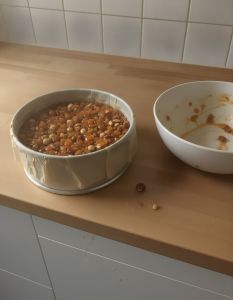
    The baked panforte in its tin, glossy and amber, with nuts and peel visible on top
  8. Cool completely in the tin for about 2 hours. Lift out, remove the baking paper and dust with icing sugar. Cut into thin wedges.
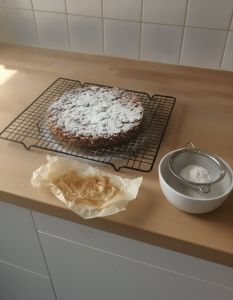
    The cooled panforte on a wire rack, dusted with icing sugar, with the baking paper beside it and a sieve of icing sugar standing in a dish

Notes

Coeliac notes
• Flour and starch: rice and corn are naturally gluten-free, but they can be milled where wheat is milled. Buy the rice flour and the corn starch labelled gluten-free (milling cross-contact).
• Check the labels: candied peel, nuts, xanthan gum, honey, spices and icing sugar can have gluten-containing ingredients in their ingredients list. Choose ones labelled gluten-free if you cannot confirm that an ingredient is suitable.
• Wafers: Baking paper is the base here; peel it off before serving. If you use an ostia wafer instead, choose one labelled gluten-free.
• Your kitchen: use clean equipment and a work surface free of gluten-containing crumbs and flour.
• Allergens: contains almonds and hazelnuts.
Baking tips
• The flour and starch weigh 70 g in total, so the xanthan is only 0.4 g, about 0.57 g per 100 g of flour and starch. A precision scale makes this small amount easier to measure.
• For neat wedges, let the panforte cool fully and use a sharp knife.
• Store the cooled cake well wrapped in an airtight container at room temperature.

Tried this recipe?

Let us know how it was!

Sources: Italian Ministry of Agriculture, production specification for Panforte di Siena (politicheagricole.it), and Tuscany Region, official tourism website, Panforte di Siena page (visittuscany.com), both read on 12 November 2026. Commission Implementing Regulation (EU) No 466/2013 entering the name Panforte di Siena in the EU register, text on legislation.gov.uk, read on 12 November 2026. Coeliac UK, grains page, on milling cross-contact, read on 12 November 2026. Recipe: How to Gluten Free, November 2026. Last checked: 12 November 2026.

Share this
Newsletter

Gluten-free confidence in your inbox.

Practical tips, new guides and community stories. No spam. Unsubscribe anytime.

FREE, ALWAYS · RECALL ALERTS ARE NEVER PAYWALLED
AI-assisted · human-reviewed
Own a gluten-free venue? List or claim your listing →