Ingredients
Method
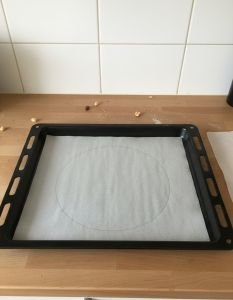
- Heat the oven to 160 °C (140 °C fan) / 320 °F. Line a baking tray with baking paper. Draw an 18 cm / 7 in circle on the underside as a shaping guide.
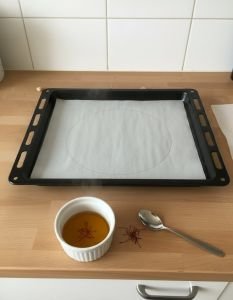
- Crush the saffron lightly and stir it into the coating's hot water. Leave to infuse while you prepare the cake.
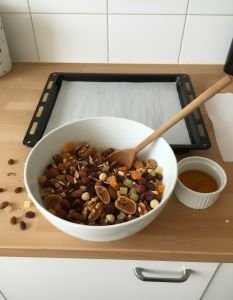
- Combine the almonds, hazelnuts, walnuts, raisins, figs and candied peel in a large bowl. Separate any clumps of sticky fruit.
- In another bowl, whisk the cake's rice flour, potato starch, measured xanthan, cinnamon and salt thoroughly. Toss this through the fruit and nuts.
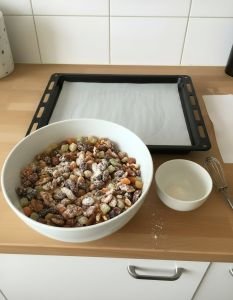
- Warm the cake's honey, water and olive oil gently in a small saucepan, just until fluid. Remove from the heat and stir in the orange zest.

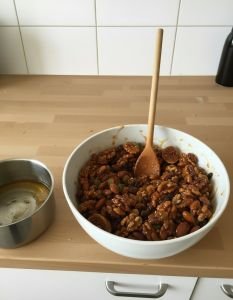
- Pour over the dry mixture. Stir firmly with a sturdy spoon until no loose flour remains. The mixture should be sticky and densely packed, rather than pourable.
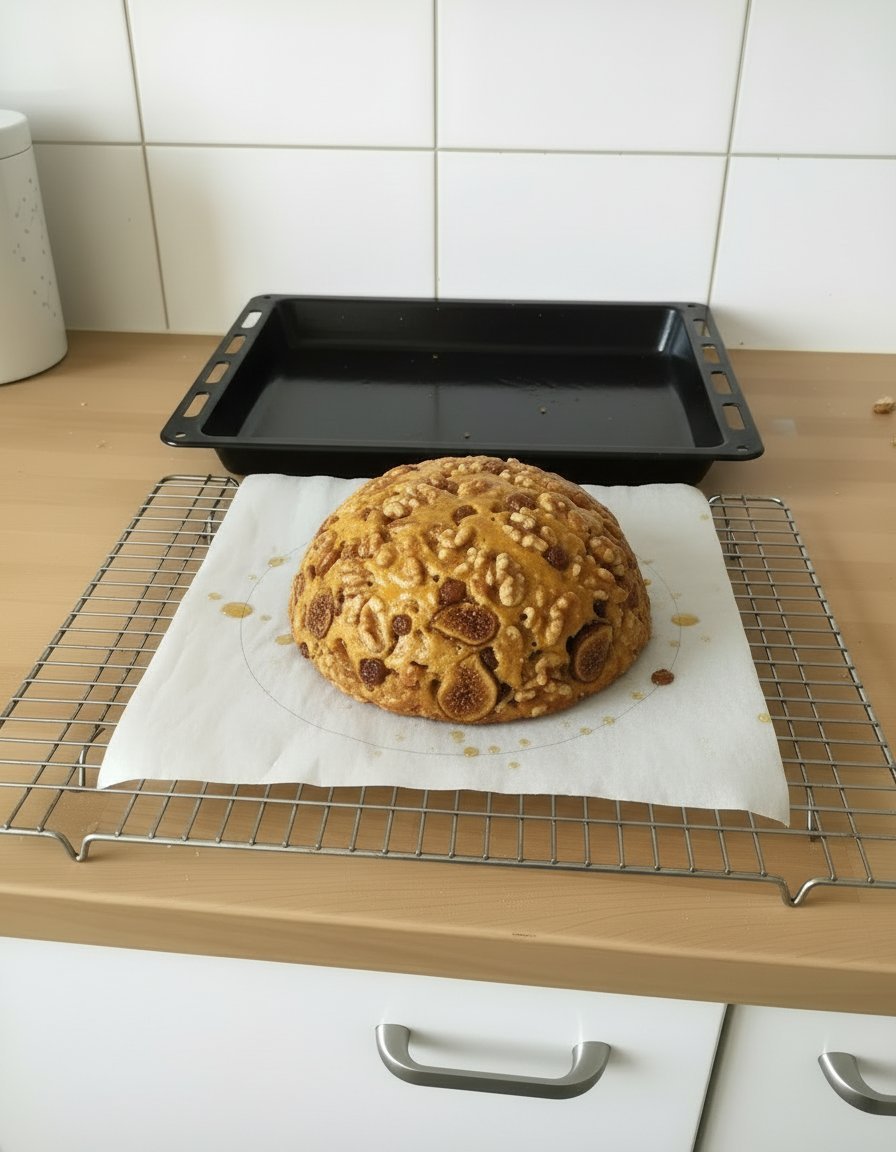
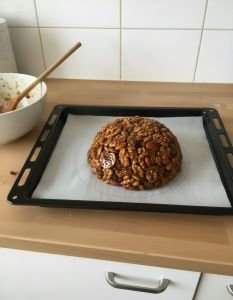
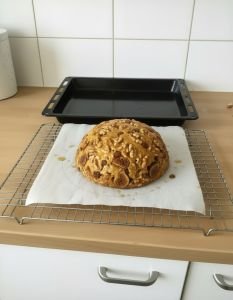
- Scrape onto the lined tray. With lightly dampened hands, press firmly into a compact dome 18 cm / 7 in across and approximately 4 cm high at the centre. Close any cracks.
- Stir the coating's rice flour, honey and olive oil into the saffron infusion. Brush the resulting paste thinly over the dome, working it into the surface.
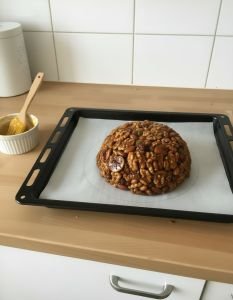
- Bake for 45 to 50 minutes, until the coating is set and lightly golden and the edges feel firm. If the surface browns early, cover loosely with foil. A skewer may remain sticky with fruit and honey; look for an absence of wet flour paste.

- Leave on the tray for 30 minutes, then transfer carefully, still on its paper, to a rack. Cool for a further 150 minutes before cutting with a sharp serrated knife.
Notes
Coeliac notes
• Flour and starch: rice and potato are naturally gluten-free, but they can be milled where wheat is milled. Buy the rice flour and the potato starch labelled gluten-free (milling cross-contact).
• Check every ingredient: a recipe that is called gluten-free does not establish that its ingredients are suitable. Check the candied peel and the dried fruit for coatings, flour dusting and added ingredients, and use the products labelled gluten-free that the list specifies. Choose a product labelled gluten-free if you cannot tell whether an ingredient is suitable. What a "may contain" line means depends on the country you shop in: see our may contain rules by country.
• Wafers: bake directly on baking paper. If you use an ostia wafer instead, choose one labelled gluten-free.
• Your kitchen: keep preparation surfaces, utensils, baking paper and serving boards free from wheat-flour dust and crumbs.
• Allergens: contains almonds, hazelnuts and walnuts. If you avoid sulphites, check the labels of the dried fruit and the candied peel: sulphites above 10 mg/kg or 10 mg/litre are on the EU list of substances causing allergies or intolerances (Regulation (EU) No 1169/2011, Annex II). If you also avoid wheat: a gluten-free label does not mean a product contains no wheat. Baking tips
• The flour and starch weigh 110 g in total, counting the flour in the coating and leaving out the chopped nuts, so the xanthan is 0.7 g, about 0.64 g per 100 g. Weigh it on a scale that reads to 0.1 g.
• Keep the nuts chopped rather than ground, so the flour basis stays as stated.
• Pressing the dome firmly and cooling it completely matter most. Cut with a sharp serrated knife.
• Once completely cool, wrap and keep airtight in a cool, dry place.
• For carrying, place a cooled slice in baking paper inside a rigid container to protect its edges.