Ingredients
Method
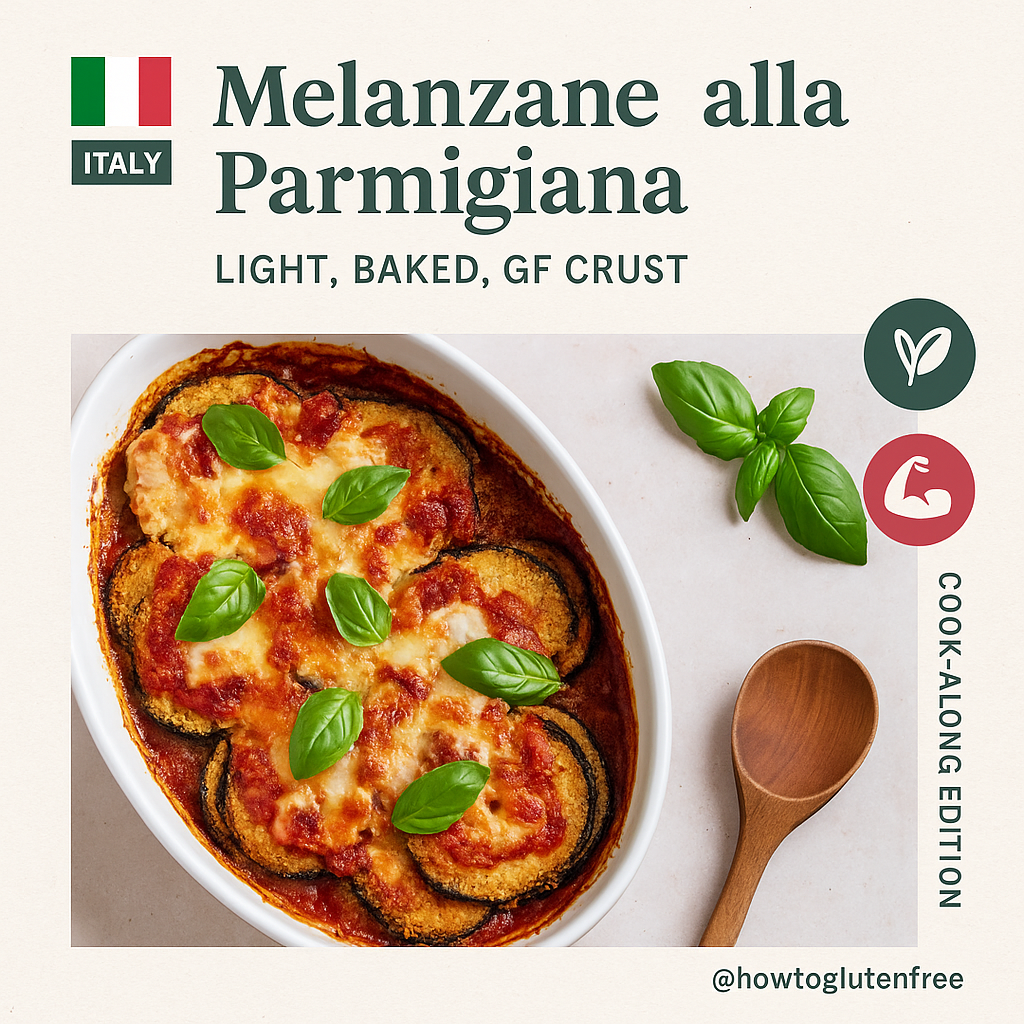
- Salt, rest, bake (no fry!): Slice the aubergines into 1 cm rounds. Salt both sides and let sit 30 minutes. Pat dry, dip each slice in whisked egg, then coat in almond flour or cornmeal. Bake at 200°C until golden — no frying.
- Layer up: Spread a little tomato sauce on the base of a baking dish. Layer aubergine, then sauce, then mozzarella/scamorza, then parmesan. Repeat 2–3 layers.
- Bake: Bake at 180°C for 30–35 minutes, until bubbling and golden. Rest a few minutes before serving so the layers set. Freezes well — cool fully first.
Notes
Coeliac notes
• The coating is the whole point. Traditional parmigiana uses wheat flour and breadcrumbs — never assume a restaurant version is safe. Here, almond flour (tender) or cornmeal (crisp) replaces them. Use certified gluten-free cornmeal/polenta (maize is often milled with wheat); almond flour is naturally GF but check shared-line packing.
• Passata: plain passata is usually fine; jarred pasta sauces occasionally add wheat starch — check.
• Cheeses (mozzarella, scamorza, parmesan) are naturally GF; grate your own, as pre-grated can carry anti-caking starch.
• No-fry = no shared-fryer risk.
• Parmigiana is a common coeliac trap in Italy because of the coating — ask specifically. When unclear, treat it as "not for me".
• The coating is the whole point. Traditional parmigiana uses wheat flour and breadcrumbs — never assume a restaurant version is safe. Here, almond flour (tender) or cornmeal (crisp) replaces them. Use certified gluten-free cornmeal/polenta (maize is often milled with wheat); almond flour is naturally GF but check shared-line packing.
• Passata: plain passata is usually fine; jarred pasta sauces occasionally add wheat starch — check.
• Cheeses (mozzarella, scamorza, parmesan) are naturally GF; grate your own, as pre-grated can carry anti-caking starch.
• No-fry = no shared-fryer risk.
• Parmigiana is a common coeliac trap in Italy because of the coating — ask specifically. When unclear, treat it as "not for me".